£4 Minimum Deposit Casinos in the UK: What to Check
A cashier minimum may differ by payment method, account eligibility and promotion terms, so the deposit alone does not show the full cost. What a £4 Minimum Deposit Actually Buys…

 Available in GB
See why Boku availability varies across UKGC-licensed casinos, how mobile deposits work, and why deposit access does not confirm withdrawals.
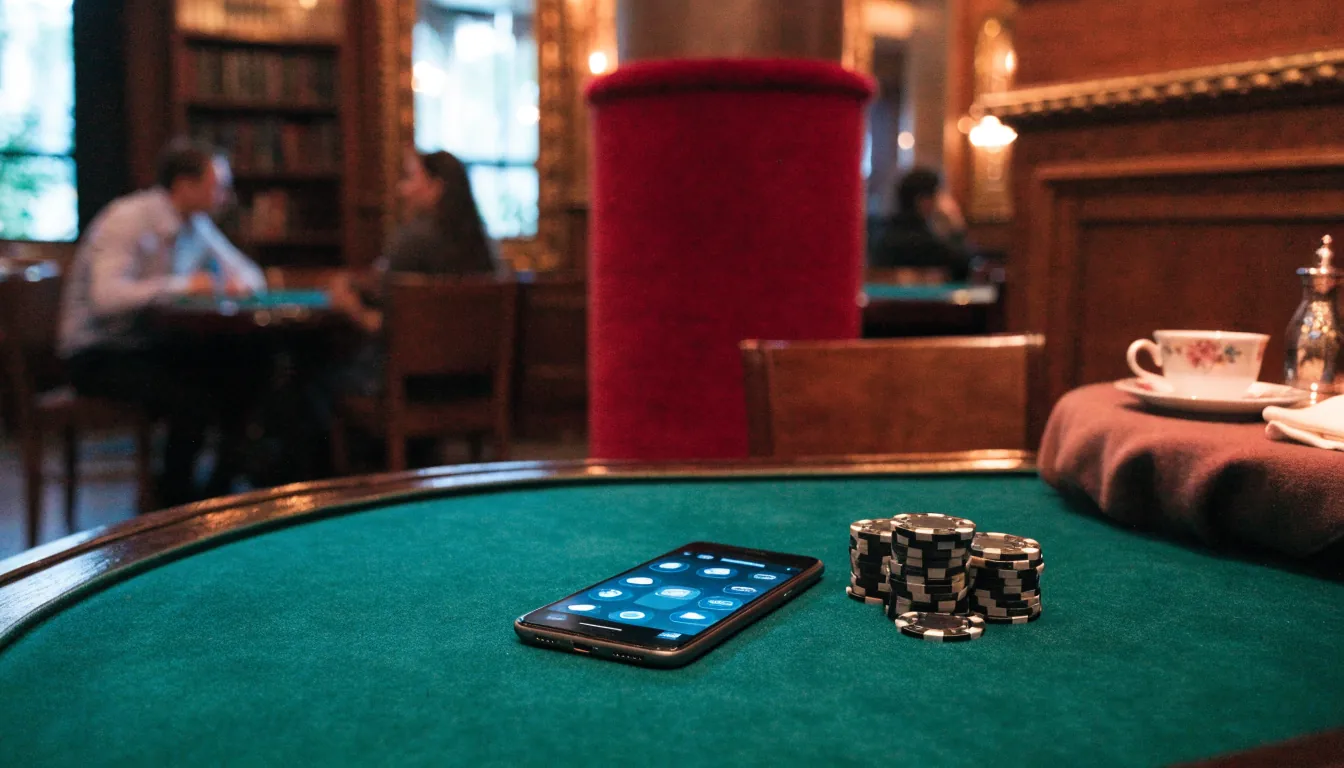
Boku availability varies by operator, and a mobile deposit does not confirm WebMoney support or provide a withdrawal route.
Pay by Phone availability has narrowed, and Boku is no longer a routine feature across UK casino cashiers. A specialist review describes a small remaining group of UK Gambling Commission-licensed casinos that take Boku deposits, against a wider set of operators that have moved away from it. This is a changing payment option, so a name previously associated with Boku should not be treated as confirmation that the method is still displayed at registration or in the cashier.
The reported history points to a gradual withdrawal rather than a regulator-imposed ban. The UK Gambling Commission did not introduce a rule naming Boku as prohibited. Instead, individual operators removed it in response to compliance risk. Since 2023, some have replaced Boku with other Pay by Phone services, including Fonix or Siru Mobile; others have removed phone-based deposits altogether. The result is an uneven market: the availability of one mobile payment service does not establish that another remains available at the same casino.
Casinos That Accept E-Checks in the UK
A specialist review has associated Boku deposits with a broader group of established brands: BoyleSports, Sun Bingo, William Hill, Sky Vegas, PlayOJO, Genting Casino, Betfred, Lottoland, bwin and 888 Casino. That is a reported operator list, not a guarantee of a live cashier option. The same review describes the remaining direct-Boku group as much smaller, with Jackpot Mobile Casino and Peachy Games among the identifiable names. Those names are useful leads, but payment availability can change as an operator revises its cashier or compliance arrangements.
BoyleSports has also been described in a specialist review as adding Boku as a payment option for UK customers. That detail does not remove the need to distinguish a past or reported listing from current availability. A payment method may be supported by an operator at one point and later be withdrawn, or appear only for eligible accounts or locations. A casino brand appearing in a Boku list therefore needs to be checked against the operator’s own current payment information before a deposit is planned.
Casinos That Accept Monzo in the UK: Payment Checks
The distinction matters particularly when looking for WebMoney. Boku is a separate payment service, so a casino named in a Boku listing cannot be presented as a WebMoney casino on that basis. Nor does a list of UK operators taking phone-bill payments establish that WebMoney is accepted. These payment labels are not interchangeable: one describes a mobile payment route, the other a distinct means of paying. A search for UK casinos accepting WebMoney therefore needs confirmation from the casino’s own cashier or payment terms, rather than an inference from Boku availability.
The labels used for phone payments can also obscure the actual service. A cashier may show Boku, Fonix or Siru Mobile, and those names indicate different routes rather than different spellings of the same method. A reported shift from Boku to Fonix or Siru Mobile is not evidence that the replacement accepts WebMoney, either. The relevant question is the named method currently offered for the account, not whether the operator has retained some form of Pay by Phone.
Casinos That Accept Solana in the UK: Payment Checks
For a practical check, the payment page should identify the method explicitly and the casino should have a current UK Gambling Commission operating licence. The licence is a regulatory requirement for legal online casino services to Great Britain; it does not certify that a particular payment option is present. Likewise, a brand’s appearance in an older Boku list is not proof of its current payment menu. Both checks matter, but they answer different questions: licensing concerns the operator’s authority to serve the market, while the cashier shows which deposit methods it offers.
The available picture is therefore narrow and time-sensitive. A specialist review reports several larger brands as Boku users, while identifying Jackpot Mobile Casino and Peachy Games among a smaller set of direct-Boku sites. At the same time, operators have been dropping Boku, substituting other phone-payment services or removing that category. None of those details turns a Boku listing into confirmation of WebMoney support. For a WebMoney deposit, only an explicit WebMoney option in the casino’s current payment information establishes that the route is offered.
Attention: A casino’s appearance in a Boku payment list is not proof of current availability and does not confirm that the operator accepts WebMoney.
A casino payment page that does not show WebMoney offers no basis for treating that method as available. The same applies when a payment method appears in a general description of a casino but is absent from its current cashier: availability is a property of the account and payment options presented at the time, not a feature that can be inferred from a similar service.
Pay by Phone is a separate route. It charges a casino deposit to a mobile phone account rather than sending it through WebMoney. The two methods should not be treated as interchangeable: evidence that a casino accepts a mobile payment does not establish that it accepts WebMoney, and a WebMoney balance does not itself confirm access to Pay by Phone.
A specialist review reported that some operators use Fonix for Pay by Phone, while others use Siru Mobile. In that review, MrQ and Duelz were associated with Fonix, and Mr Vegas and Videoslots with Siru Mobile. These are examples of reported routes, not a permanent directory: payment arrangements can change, so the cashier remains the relevant place to check whether a particular option is offered.
The distinction matters because a search for alternatives to WebMoney can otherwise collapse several different services into one category. Fonix and Siru Mobile are not evidence of WebMoney support; they are alternative payment routes that may be available at particular casinos. Nor does a casino’s acceptance of one phone-payment provider establish that it accepts another. The payment provider named at checkout is the detail that determines which route is being offered.
For someone comparing methods, the practical question is therefore not simply whether a casino accepts “mobile payments”. It is whether the cashier presents the specific service being considered and whether that service can be used for the intended transaction. A broad label can conceal differences between providers. The distinction is not cosmetic: a transaction through one service cannot be assumed to work through another.
A specialist review also described a route in which Boku is used to fund Neteller, followed by a deposit from Neteller at a casino that accepts Neteller. This is an indirect route, not direct WebMoney support. It involves two separate payment stages: first, value is added to the e-wallet through Boku; then the e-wallet is used at a casino whose cashier accepts Neteller.
That distinction should be kept visible when comparing costs and conditions. The reported route does not mean that Boku is accepted directly by every casino offering Neteller, nor that Neteller and WebMoney are the same service. It also does not establish that every Neteller account can be funded this way or that every casino accepting Neteller will accept every Neteller-funded balance. Those details need to be confirmed with the relevant payment provider and casino before a deposit is attempted.
The route may be relevant where direct WebMoney support is not displayed, but it should not be described as a WebMoney substitute in the strict sense. It is a sequence involving Boku and Neteller, each with its own acceptance conditions. If either part is unavailable, the chain does not work. That is less straightforward than a single payment option appearing in the cashier, and the extra step should be weighed as part of the payment decision rather than treated as a guarantee of access.
Reported as a Pay by Phone route used by operators such as MrQ and Duelz.
Reported as a Pay by Phone route used by operators such as Mr Vegas and Videoslots.
An indirect method involving funding a Neteller e-wallet via Boku before depositing at a casino.
The reported Fonix and Siru Mobile examples establish that some casinos have used other Pay by Phone providers. The Neteller route establishes that Boku has been described as a way to fund an e-wallet before depositing at a Neteller-accepting casino. Neither point establishes which UK casinos accept WebMoney. A payment method should not be attributed to a casino merely because another route exists, or because both options are discussed alongside casino deposits.
This leaves three distinct checks. First, identify the named method in the casino cashier. Second, if using an indirect route, confirm that each provider in the chain supports the relevant transaction. Third, distinguish a reported example from a current payment option: an older description may not match the cashier now available to an account.
For WebMoney specifically, a casino’s acceptance cannot be inferred from its use of Fonix, Siru Mobile, Boku or Neteller. A casino may offer one, several or none of those routes, and each represents a separate payment arrangement. The available alternatives can help identify another way to fund an account, but they do not turn an unconfirmed WebMoney claim into a confirmed one.
A Boku deposit is initiated inside a casino account, but the payment is authorised through the mobile phone. In the cashier, the player selects Boku, enters the deposit amount and supplies a phone number. Boku then sends an SMS verification code, which must be entered to confirm the transaction. The charge is applied through the mobile network rather than paid directly by card at the cashier.
Casinos That Accept Bitcoin in the UK: What to Check
That sequence describes a Boku payment, not a WebMoney deposit. Seeing Boku among a casino’s payment options, or completing its SMS confirmation, does not establish that the casino accepts WebMoney, a WebMoney card or a WebMoney-funded wallet. Those are separate payment arrangements and require separate confirmation from the operator.
The distinction matters because payment names can appear together in broad casino searches while referring to different methods. Boku uses a mobile number and SMS authorisation; the described process does not involve entering WebMoney account details. A Boku cashier flow therefore cannot be treated as evidence that a casino accepts WebMoney, even if the deposit reaches the same casino balance.
A specialist review describes Boku deposits as available only in amounts divisible by ten, with £10, £20 and £30 given as examples. That is a reported condition, not a universal rule for every operator or a guarantee that those amounts remain available. The cashier’s listed options are the relevant practical check for a Boku transaction. This point concerns Boku only; it says nothing about a casino’s minimum deposit through WebMoney or any other method.
The SMS code is part of the payment confirmation. It authorises the Boku transaction associated with the entered mobile number; it does not change the payment method into WebMoney or confirm that WebMoney is supported elsewhere in the cashier. Likewise, a successful Boku deposit confirms use of that route for the transaction, not the availability of other funding methods.
Boku Deposit Process
Select Boku in the casino cashier, enter the deposit amount and provide a phone number.
Receive an SMS verification code from Boku and enter it to confirm the transaction.
The deposit is applied through the mobile network rather than paid directly by card.
Boku is deposit-only. It can put funds into a casino account, but it cannot receive casino funds as a withdrawal destination. The deposit and withdrawal sides of an account should therefore not be assumed to use the same payment method. This is a property of Boku itself, not a statement about how WebMoney withdrawals work at any particular casino.
For anyone comparing payment labels, the useful distinction is functional: Boku is selected in the casino cashier, uses a phone number and requires an SMS code; WebMoney support would need to be shown separately by the casino. A search result or general payment-method description cannot substitute for the operator’s own current cashier information. The evidence of a Boku transaction ends at Boku. It does not establish that WebMoney is accepted, that a WebMoney card can be used, or that a related bonus is available.
A phone-funded deposit and a mobile slot game are separate parts of the transaction. A payment method determines how money reaches a casino account; it does not change the rules governing how an online slot may operate in Britain. That distinction matters when comparing Pay by Phone with WebMoney: neither a mobile screen nor a particular payment route creates an exception to the rules for spins.
For Boku, the deposit is charged to the player’s mobile phone bill. Once funds are in an account and used on an online slot, the relevant conditions are those for the game, not the method that funded the balance. A search for WebMoney slots or real-money slots on a phone therefore does not answer whether a particular casino accepts WebMoney, and it does not alter the rules that apply to slot play.
Casinos That Accept Dogecoin in the UK: Payment Checks
Autoplay is banned for online slots in Britain. A game cannot be set to run a sequence of spins automatically, even where the account was funded from a phone or through an e-wallet. The player must not treat a payment option or a mobile version of a game as permission for automatic play. A slot interface may look different on a smaller screen, but the legal condition is about the play itself.
Each online slot spin must also last at least 2.5 seconds. That is a minimum duration for the spin, not a promise about how quickly a session will proceed. A payment confirmation and a game spin are separate events: the first concerns the deposit, while the second is subject to the slot rule. A casino’s cashier cannot change the required spin duration.
These requirements apply to online slots in Britain, whether a player is using a phone or another device. They are not specific to Boku, and they do not establish that WebMoney is available at any particular operator. A casino could offer a mobile-friendly slot while its cashier handles payment through a different route; the game rules remain unchanged.
Free-play labels do not turn a real-money payment method into a game feature. Likewise, a page describing online slots that accept WebMoney would need to establish the operator’s actual cashier options separately. The presence of slots on a mobile site, or the ability to play them on a phone, is not evidence of WebMoney support.
UK Slot Rules
In Great Britain, autoplay is banned for online slots, and each spin must last at least 2.5 seconds regardless of the payment method used.
For real-money play, the practical distinction is straightforward: the payment route concerns account funding, while the spin rules govern the slot after play begins. In Britain, autoplay remains prohibited and a spin must last at least 2.5 seconds. Neither condition changes because the deposit was made by Pay by Phone, nor does it confirm that WebMoney can be used.
A payment method that puts money into a casino account does not necessarily provide a way to take winnings out. Boku is deposit-only: it cannot receive casino withdrawals. Anyone funding play with Boku therefore needs a separate withdrawal method registered with the casino.
That distinction matters when comparing real-money slots and payment options. A casino’s acceptance of a deposit method is not evidence that the same method can handle withdrawals. Nor does a payment label establish that a casino supports WebMoney for either direction of travel. The relevant question is whether the operator offers a suitable cash-out route for the account, not simply whether a deposit can be made.
The withdrawal method should be considered before a deposit, rather than after a balance has accumulated. Debit cards, e-wallets and bank transfers are examples of alternative routes that may be registered for withdrawals. Credit cards are not an option for gambling payments at UK-licensed casinos, and a wallet cannot be used where it allows credit-card funds to be spent on gambling.
This creates two separate checks in a real-money account:
For a Boku deposit, the second check is essential because the phone payment itself cannot be used to cash out. The same separation should be applied when evaluating claims about WebMoney slots, apps or sites: a deposit option alone does not establish that winnings can be withdrawn through WebMoney. Without a confirmed withdrawal route, the payment arrangement is incomplete for real-money play.
A casino account may show payment choices in its cashier, but the existence of a method for one transaction type should not be treated as proof that it is available for the other. Depositing and withdrawing are distinct functions. The practical test is whether the operator allows an alternative withdrawal method to be registered and used for casino funds.
In Britain, online gambling is legal only through licensed and regulated operators. The UK Gambling Commission requires operators serving consumers in Great Britain to hold the relevant licence. Before depositing, the operator’s current licence number should be checked against the Commission’s public register. This verifies the operator’s regulatory status; it does not prove that WebMoney is accepted, or that any particular payment route can be used to withdraw winnings.
The resulting decision is straightforward: a deposit method is not a complete payment plan unless a separate way to withdraw funds is available. With Boku, that separate route is required by the method’s deposit-only status. For any claimed WebMoney casino, the cash-out option must be assessed independently rather than inferred from the deposit wording.
Boku limits are described at more than one level: a casino may set a transaction ceiling, while a separate daily cap can apply across payments handled by the mobile network. These figures concern Boku. They do not establish deposit limits for WebMoney or confirm that a casino accepts it.
Reported limits vary: one source cites a £30 standard UK transaction limit (with some allowing £40 or £50), while another mentions £10 per transaction and a £30 daily network limit. A third version specifies a £30 daily limit without a per-transaction cap.
The published figures conflict. One specialist review gives £30 as the standard UK limit for a single Boku deposit, while noting that some casinos or network operators may permit £40 or £50. Another account describes a different pattern: about £10 per transaction and £30 per day at network level. A competing version of that account specifies a £30 daily limit but no per-transaction cap. There is therefore no single per-payment figure that can be presented as a settled UK-wide rule.
The distinction matters when comparing a cashier limit with a network limit. A transaction ceiling applies to one payment; a daily cap restricts the total processed over the relevant day. A casino’s displayed maximum may consequently be higher than the amount that can actually pass if the network limit has already been reached. Conversely, a network allowance does not require a casino to accept a deposit at that amount.
One specialist review attributes enforcement of the daily Boku limit to the mobile operator rather than the casino. On that account, the operator controls whether further payments can be processed once its cap is reached. The casino may show the payment option and set its own transaction conditions, but it does not control the network’s daily allowance. As the reported limits differ, the responsible party and the current terms should be distinguished rather than treated as one universal cashier rule.
Casinos That Accept EntroPay in the UK: What to Check
For a deposit via WebMoney, these Boku figures are not a substitute for checking the payment terms shown by the casino. A WebMoney transaction would need its own stated minimum, maximum and any applicable daily restriction; a Boku limit cannot be transferred to it by analogy. The same distinction applies to searches for WebMoney deposits for slots, instant banking, card-funded payments or direct withdrawals: none of those labels determines Boku’s limits, and none is confirmed by the figures above.
The practical comparison is therefore conditional. A £30 per-transaction ceiling is reported by one specialist review, with higher allowances reported at some operators or networks; other descriptions instead give a lower transaction amount alongside a daily cap, or state only the daily cap. The daily limit is separately attributed to the mobile operator in a specialist review. These are reported terms, not a uniform rule for every casino and network.
A deposit method and a welcome offer are separate conditions. A casino may accept a Pay by Phone deposit without counting it towards a promotion; eligibility varies by operator. A specialist casino review identifies MrQ, Duelz, Mr Vegas and Videoslots as accepting Pay by Phone deposits for bonus eligibility. That is a reported position, not a substitute for the current terms attached to an individual offer.
This distinction matters when comparing real-money casino offers linked to WebMoney. The available bonus information concerns Pay by Phone, not WebMoney, so it does not establish which WebMoney deposits qualify for a welcome bonus, free spins or a bonus code. Payment support alone is not evidence of promotional eligibility.
A specialist casino review describes a welcome offer of a 100% deposit match capped at £100, with a 35x wagering requirement. These figures describe a reported offer structure, not a guaranteed or market-wide deal. A matching percentage says how the offer relates to the qualifying deposit; the cap limits the bonus amount. The wagering condition adds a further requirement before the bonus can be treated as unrestricted money. Without the full offer rules, the headline match is not enough to calculate its final value.
Timing also affects the calculation. The same type of review reports that bonus funds expire within 30 days, while bonus spins expire within 72 hours. These are specific reported deadlines, not universal terms. If a qualifying deposit is made but the promotion is not activated or used within the stated period, the promotional value may be lost. A short expiry makes the offer less useful where the conditions cannot be completed in time.
Before depositing, the relevant checks are the payment method’s eligibility, whether the offer must be activated, the wagering requirement, the maximum bonus, and the expiry rules for each reward. Pay-by-phone deposits may be excluded from welcome offers, so the promotion’s terms should be checked before payment. A bonus should be valued only after its conditions and deadlines are known; the headline amount is not the amount available to withdraw.
A small deposit is constrained by both the payment method’s stated limits and the balance available on the phone. These are Boku terms, not evidence that a casino accepts WebMoney: the two payment methods are not interchangeable.
Casinos that accept Litecoin in the UK: what to check
Boku charges can be added to a monthly mobile bill or taken from prepaid, or PAYG, credit. A specialist review says a PAYG deposit cannot exceed the credit remaining on the phone. If that balance is lower than the selected deposit, the payment may not go through; the phone balance therefore acts as a separate ceiling, even where the casino’s cashier permits a higher amount.
Published Boku limits do not form a consistent schedule. One specialist review gives a minimum of €10, a maximum of €30 and a monthly cap of €240. Other limit reporting describes £30 as the standard UK transaction ceiling, with some operators allowing £40 or £50. Those figures conflict in both currency and structure: the euro-denominated account includes a monthly cap, while the sterling account gives a per-transaction range. Neither should be silently treated as a universal UK rule. The applicable cashier terms and mobile account determine what can actually be charged.
That distinction matters for a low-value deposit. A requested amount has to satisfy the casino’s minimum, remain within the payment limit that applies to that transaction, and fit within the available PAYG balance or bill arrangement. Passing one test does not establish that the others are met. In particular, a WebMoney minimum-deposit label cannot be inferred from Boku’s reported limits.
The same caution applies to claims about a £5 deposit or an instant mobile-funded payment. The Boku amounts reported here do not establish that a casino will accept a £5 transaction, and the payment details do not establish an instant crediting time. WebMoney support, minimum deposits and processing times need to be checked as separate terms rather than derived from phone-payment limits.
Network Support
Pay by Phone and Fonix are supported by EE, O2, Vodafone, and Three, although this does not guarantee that every casino using these networks offers the services.
A payment route should be compared by what it actually does, not by treating WebMoney and Pay by Phone as interchangeable. Pay by Phone charges a casino deposit to a mobile account; WebMoney is a separate payment service. Support for one does not establish support for the other, so a casino’s current cashier is the relevant place to check before choosing a deposit method.
A specialist review of UK payment options reports a change in the mobile-payment landscape since 2023: some operators have replaced Boku with Fonix or Siru Mobile, while others have removed Pay by Phone entirely. That is a useful distinction when an older casino listing names Boku. A previously available route may have been changed or withdrawn, and the payment method shown at an operator is more informative than an old description.
The reported network support is also specific. EE, O2, Vodafone and Three support Pay by Phone and Fonix. That does not mean every casino using one of those networks offers either service; network support and casino cashier availability are separate conditions. Siru Mobile is another service identified as a replacement for Boku, but it should not be assumed to appear at every operator that once accepted mobile deposits.
For anyone comparing alternatives to WebMoney, the practical check is therefore two-part: establish whether the casino lists WebMoney, then check which other payment methods its cashier actually offers. A Pay by Phone option may suit a deposit charged to a mobile account, but it is not evidence of WebMoney acceptance. Nor does a casino’s use of Fonix or Siru Mobile answer whether WebMoney is available.
This distinction matters for searches for WebMoney slots or a WebMoney casino site in the UK. A game catalogue and a payment method are separate features; the presence of slots does not identify how the account can be funded. Payment labels should be checked directly at the operator rather than inferred from a brand’s history with Boku or from mobile-network coverage.
Casinos That Accept MiFinity in the UK
A casino’s payment options and its relationship with GamStop are separate questions from its gambling licence. A claim that a site accepts WebMoney, or is not connected to GamStop, cannot be established by the presence of a UK Gambling Commission licence. The licence identifies regulatory status; it does not certify either payment availability or scheme membership.
The Gambling Commission regulates gambling in the United Kingdom, including online casino activity. For remote gambling offered to consumers in Great Britain, the operator must hold the relevant Commission licence even if its key equipment is located elsewhere. The Commission is the sole regulator for commercial gambling in Great Britain. It issues operating licences to gambling businesses and personal licences to individuals working in regulated roles.
For a casino serving British customers, a current operating licence is therefore a basic legal check, not a shortcut for checking its cashier or account controls. The licence number should be checked against the Commission’s public register before money is deposited. A site’s own statement, a payment logo, or a page describing WebMoney does not replace that register check.
The same distinction applies to searches for non-GamStop casinos that accept WebMoney. A licence record does not confirm that a particular operator participates in GamStop, nor does it confirm that WebMoney deposits are available to UK customers. Those details require separate, current confirmation from the operator. They should not be inferred from a licence, a general casino description or another site’s label.
The practical sequence is consequently narrow: establish that the operator holds a valid UKGC operating licence, then verify WebMoney availability and any GamStop status separately. If the claims cannot be confirmed independently, the licence should not be treated as evidence for them. It answers who regulates the operator and whether it is authorised for the relevant market—not which payment methods appear in the cashier or which self-exclusion scheme is connected to the account.
Boku’s standard UK limit is £30 per transaction, although some casinos or mobile networks may allow up to £40 or £50. Network limits are often around £10 per transaction and £30 per day; PAYG deposits are also capped by your remaining phone credit.
Yes, a small number of UK-licensed casinos still accept Boku, though availability has declined since 2023. Check the casino’s current cashier, as payment options can change.
Yes. Jackpot Mobile Casino and Peachy Games are among the remaining direct-Boku sites, but check their current cashiers to confirm availability.
Bonus eligibility varies by casino, and Boku deposits generally do not come with specific bonuses. Some operators accept pay-by-phone deposits for bonus eligibility, so check the casino’s terms before depositing.
Operators have been removing Boku because of compliance risks, sometimes replacing it with Fonix or Siru Mobile and sometimes ending phone-based deposits. The UK Gambling Commission has not specifically banned Boku.
A cashier minimum may differ by payment method, account eligibility and promotion terms, so the deposit alone does not show the full cost. What a £4 Minimum Deposit Actually Buys…
Availability depends on the options shown in the account cashier, while card…
UK-licensed casinos cannot accept credit-card payments for gambling, so payment alternatives and…
Tether availability depends on the account cashier, payment direction, currency and supported…
Prepared by the Playgrandcasinouk.com editorial staff.