PlayGrand and GAMSTOP UK
PlayGrand GAMSTOP questions need a safety-first answer. GAMSTOP is a free online self-exclusion service that helps block access to gambling websites and apps, while Gambling Commission guidance also says gambling…

 Available in GB
Are PlayGrand casino winnings taxed in the UK? Learn about 2026 HMRC tax-free rules, Remote Gaming Duty, and cash out your real money winnings securely!
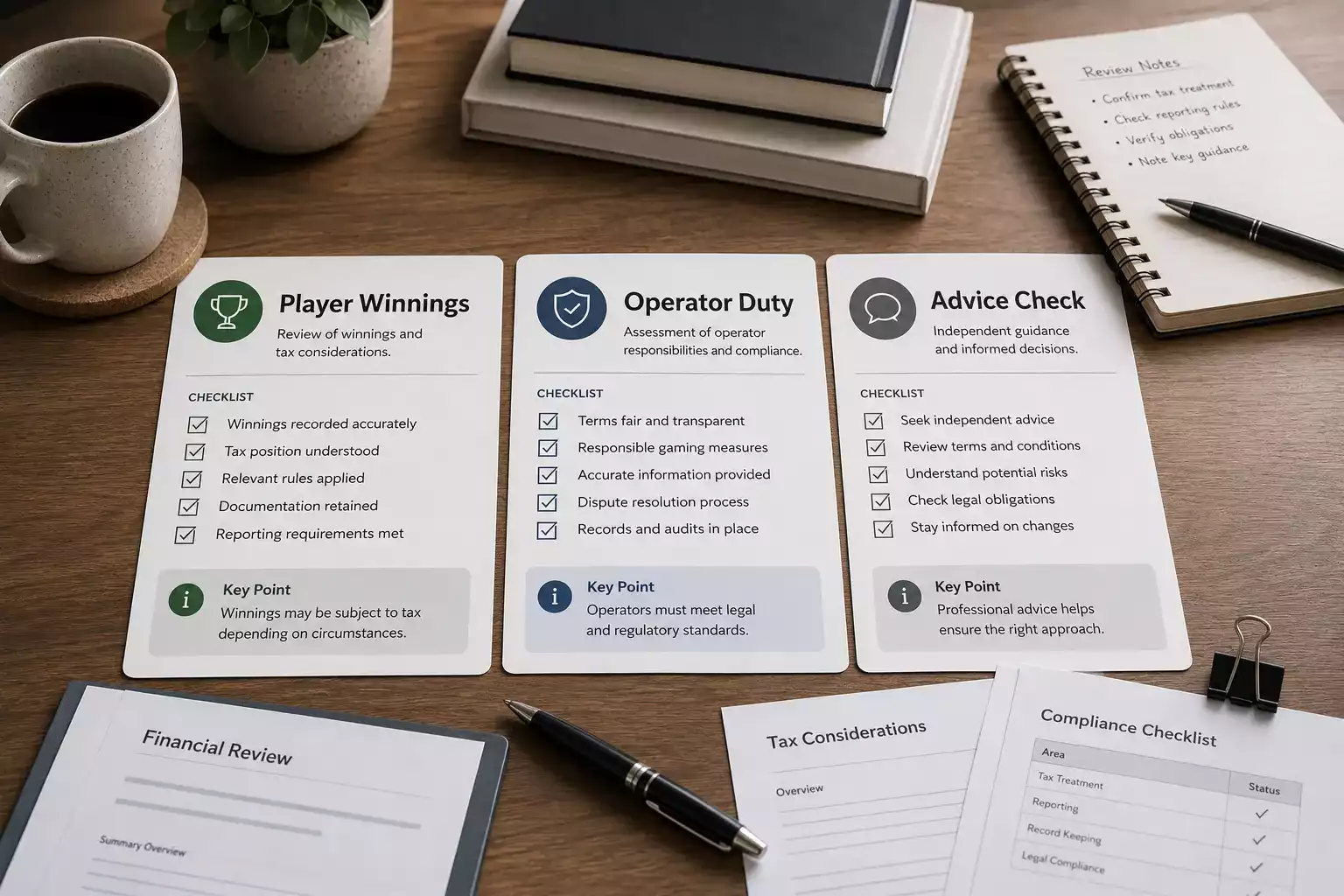
PlayGrand winnings should not be described with a blunt, guaranteed tax-free label. HMRC guidance indicates that gambling is not normally treated as a trade merely because a person has a system or makes a living from gambling, but that is not individual tax advice. A player’s personal circumstances can matter, and this page cannot decide anyone’s tax position. The safer answer is: treat ordinary gambling winnings differently from operator taxes, keep records where money movement is material, and ask a qualified adviser if a situation is unusual.
The separate operator-tax point is Remote Gaming Duty. That is a duty for operators, not a charge deducted from a player’s PlayGrand prize as a personal winnings tax. Confusing those two ideas is one of the easiest ways to misread casino tax content in the UK.
For a UK reader searching whether PlayGrand winnings are taxed, the useful first step is to separate three questions. First, what does HMRC generally say about gambling activity as trade? Second, what taxes are paid by remote gambling operators? Third, is there anything about your own situation that needs professional advice? Only the first two can be discussed here in a general editorial way.
The HMRC point is narrow. The guidance does not turn every successful gambler into a trading business merely because they are systematic, skilled or profitable. That does not give a player a personalised ruling. It simply explains why generic casino-winnings pages should avoid panic language and also avoid absolute promises.
If you are still checking PlayGrand more broadly, start with the PlayGrand UK review. It links the tax question back to licence, account, payment, bonus and safer-gambling checks rather than treating tax as a standalone reason to join.
Remote Gaming Duty is often misunderstood because it uses tax language near online casino content. The government response states that Remote Gaming Duty increases from 21 percent to 40 percent from April 2026. That is operator-duty context. It is not the same as saying a PlayGrand player has a 40 percent tax on a slot win, a table-game win or a withdrawal.
This distinction matters when comparing casino reviews. A page that talks about operator duty as if it were a player fee can make an account sound more expensive than the evidence supports. A page that talks about winnings as if every possible case is automatically tax-free can be too casual. Both approaches lose the useful middle ground.
That middle ground is simple: read Remote Gaming Duty as market and operator context, not as a direct statement about your personal winnings. Read HMRC gambling guidance as general context, not as bespoke tax advice.
Tax and payments often get mixed together because the moment a win feels real is usually the withdrawal. A PlayGrand withdrawal question may involve review status, method availability, bank transfer fallback, identity checks or support messages. Those are cashier and account issues, not automatically tax issues.
The PlayGrand payments guide explains why payment methods must be checked in the account and why a method listed in general support should not be treated as guaranteed for every UK account. It also keeps credit-card rules, withdrawal review and KYC separate. That separation is useful because a payment delay should not be mislabelled as tax withholding unless official account information clearly says so.
Good personal housekeeping still helps. Keep copies of important account messages, withdrawal confirmations and bank records if the amounts are significant to you. That is common-sense record keeping, not a claim that you owe tax or that the site has withheld anything.
Operator taxes can still affect the market around a player. A higher remote gaming duty rate may influence how operators price promotions, design rewards, control costs or present casino products. The point is indirect. It does not prove that PlayGrand will change a specific bonus, remove a specific game, increase a fee or pass a specific cost to a named player.
That is why this page does not make predictions about PlayGrand promotions. The PlayGrand UK rules guide already explains that UK-facing bonus wording should be cautious because Gambling Commission LCCP changes have moved rewards and bonuses toward clearer and safer structures. Any live promotion still needs visible official terms before exact values, wagering requirements or bonus codes are repeated.
The useful insight is that player tax and operator duty can both appear in one search journey, but they answer different questions. Player tax asks how a person’s winnings are treated. Operator duty asks how a licensed remote gambling business is taxed on gaming revenue.
Most readers do not need a casino review to become a tax manual. Still, there are situations where advice is sensible: unusually large sums, gambling connected to paid content or appearance fees, complex residency questions, business accounts, insolvency issues, disputes, or any case where you are unsure how HMRC rules apply to your own facts.
A review page cannot safely answer those details. It should point you away from shortcuts. Do not rely on forum comments, affiliate snippets or a casino landing page for personal tax treatment. Do not assume that a bank query, affordability message, source-of-funds request or withdrawal review is a tax demand. Read the account message first, then decide whether the issue is payment, verification, safer-gambling or tax advice.
The bottom line is deliberately cautious. PlayGrand tax content should help you avoid confusion, not give false certainty. For most readers, the important distinction is between ordinary gambling-winnings context, which HMRC treats differently from a trade in the general guidance, and operator Remote Gaming Duty, which belongs to the business side of remote gambling.
Even where a simple player-tax answer sounds reassuring, records are still useful. Withdrawal confirmations, bank entries, support messages, account statements and identity-check messages can help explain what happened if a bank, adviser or support team asks about a transaction later. Keeping records does not turn casino play into a taxable trade. It simply avoids relying on memory when a payment or account question becomes important.
Records are also useful because several issues can look similar from the outside. A delayed withdrawal, a document request, a source-of-funds question and a tax concern are not the same thing. The safest approach is to identify the actual message first. If PlayGrand or a payment provider asks for account verification, respond through the official route. If the question is genuinely about your personal tax position, use qualified advice rather than a review-page shortcut.
This page avoids personal tax advice. The general HMRC guidance used here says gambling is not normally treated as a trade merely because someone has a system or even makes a living from gambling. Unusual personal facts still need professional advice.
No. Remote Gaming Duty is an operator-side duty. It should not be described as a standard deduction from a player’s PlayGrand winnings or as a replacement for personal tax advice.
Consider advice for unusually large sums, complex residency questions, gambling linked to paid content or business activity, disputes, insolvency issues, or any situation where your own facts do not match a simple review-page summary.
Created by the "Playgrandcasinouk.com" editorial team.