PlayGrand Deposits UK
PlayGrand support lists Visa, Mastercard, Paysafecard, Skrill, Neteller and Bank Transfer as general deposit methods. The same official wording says country-specific methods available to a player are shown on the…

 Available in GB
Discover PlayGrand payment methods in the UK for 2026. Compare instant deposits, secure withdrawal options, processing fees, and KYC rules. Fund your account!
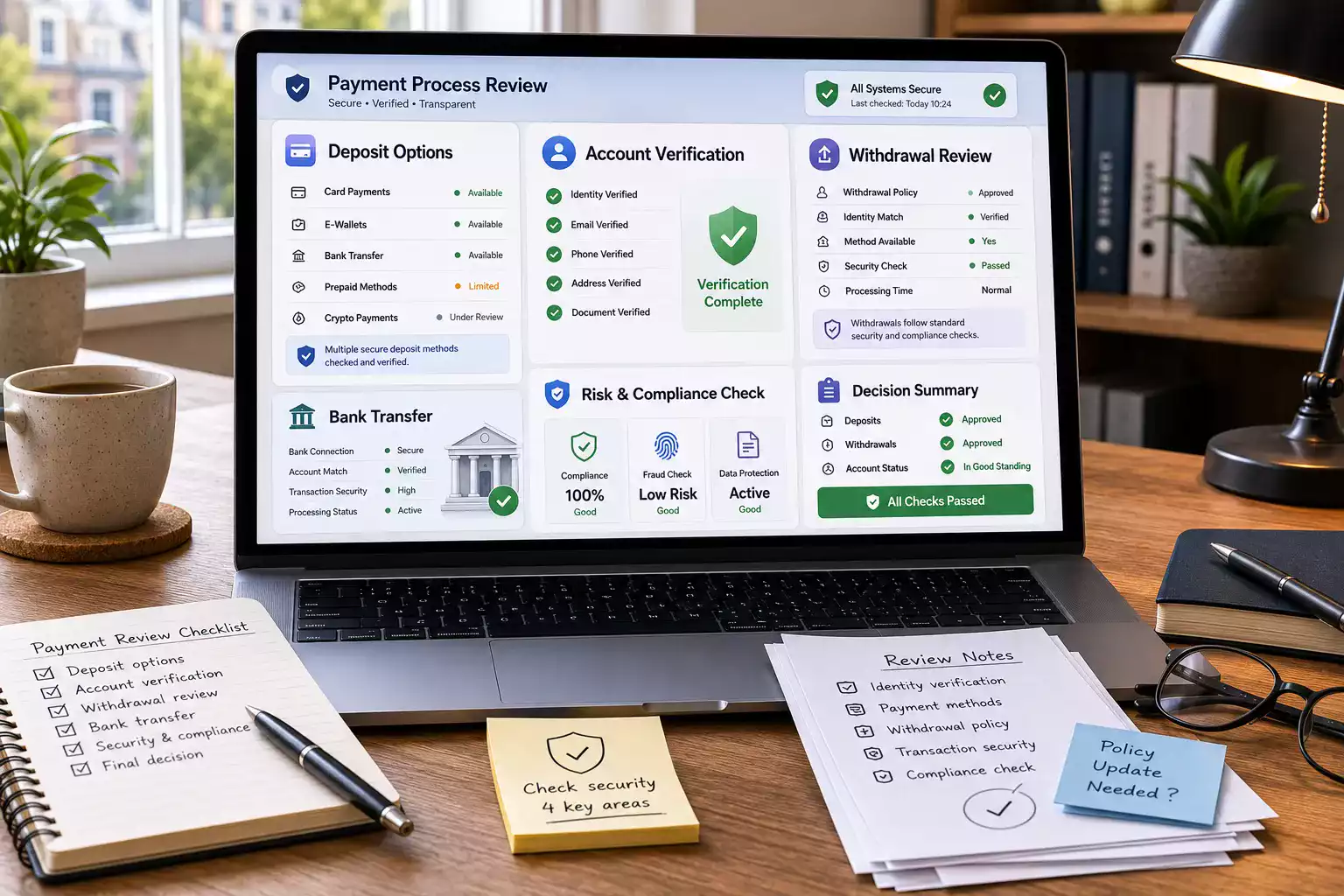
PlayGrand support lists Visa, Mastercard, Paysafecard, Skrill, Neteller and Bank Transfer as general deposit methods, but it also says country-specific options are shown on the deposit page in the casino lobby. For withdrawals, PlayGrand says the available methods are displayed on the withdrawal page and normally match the methods used for deposits, with bank transfer shown if a deposit method cannot be used for withdrawal. For UKGC accounts, withdrawals may remain under review for at least 24 hours, and the time after approval depends on the selected withdrawal method.
That makes PlayGrand payments a check-before-you-act topic, not a fixed cashier table. The useful question is not simply whether a method exists somewhere in support. It is whether that method appears for your account, location, verification status, offer and deposit or withdrawal step at the moment you use it. Understanding the expected payout times and withdrawal limits is crucial for managing your casino bankroll effectively.
The official evidence supports a cautious payment overview. PlayGrand publishes a general method list, but that list is not a promise that every UK reader will see every method. The cashier can be narrowed by country, account status, internal limits, payment-provider availability, the promotion being used and regulatory checks. This is especially important for a UK-facing guide because the word “UK” is often used in searches, while Gambling Commission remote-casino regulation is Great Britain-focused and Northern Ireland has separate arrangements.
| Topic | What can be said safely | What still needs checking |
|---|---|---|
| Deposits | General support lists Visa, Mastercard, Paysafecard, Skrill, Neteller and Bank Transfer. | Which options actually appear on the casino deposit page for the account. |
| Minimum deposit | The checked help article does not give one fixed public amount. | The amount shown on the deposit page, influenced by user, offer or account deposit limit. |
| Withdrawals | Withdrawal methods are shown on the withdrawal page and usually follow deposit methods. | Whether the original deposit method supports withdrawal or bank transfer is shown instead. |
| Review time | For UKGC accounts, withdrawals may remain under review for at least 24 hours. | Post-approval transfer time by method and any account-specific review. |
| Fees | PlayGrand states that it does not charge withdrawal fees. | Possible exchange, card-issuer, bank or financial-institution charges outside PlayGrand. |
This table is intentionally conservative. It avoids a common review-site mistake: turning a support article into a guarantee. A payment method can be generally listed, visible for one player and absent for another. A fee statement can be true for the operator while external charges still apply. A withdrawal can pass the review stage and still take longer after approval because the receiving method or bank controls the final leg.
For deposits, the safest first step is to treat the PlayGrand method list as a menu of possible routes rather than a cashier screenshot. The general list includes Visa, Mastercard, Paysafecard, Skrill, Neteller and Bank Transfer. The same support wording points users to the deposit page in the casino lobby for country-specific methods. In practical terms, the live cashier is the place where a UK reader should confirm available options, minimum amount, limits and any offer-specific conditions.
The Great Britain credit-card rule is a separate issue. Gambling businesses must not accept credit-card payments for gambling in Great Britain, including online casino and bingo. So if a page or old review loosely says “Visa” or “Mastercard”, that should not be read as permission to deposit with a credit card. The safer interpretation is to check the live cashier and follow the rule that applies to licensed gambling in Great Britain.
The deposit page also matters for bonus decisions. A welcome offer may have its own eligibility route, minimum-deposit condition or payment-method exclusion, and PlayGrand’s checked minimum-deposit help article does not publish one universal public amount. For a narrower first-deposit checklist, use the deposit method checks page. For offer-specific caution, keep the payment decision separate from bonus headlines.
Withdrawals need their own check because a deposit method and a withdrawal method are not always identical in practice. PlayGrand support says the available withdrawal methods are displayed on the withdrawal page and are the ones used for deposits. If the deposit method cannot be used for withdrawal, the player should be shown the screen to enter banking details for a bank transfer. That wording is useful because it explains the fallback, but it does not guarantee that any particular method will be the fastest or available for every account.
The UKGC-specific review wording is also important. PlayGrand says withdrawals may stay under review status for a minimum of 24 hours for UKGC accounts. After approval, the time for funds to arrive depends on the chosen withdrawal method. This is why “instant payout” language would be misleading here. A review stage, document check, bank transfer fallback or external bank process can all change the real experience.
For the dedicated withdrawal path, the planned withdrawal guide covers review times, method-dependent timing and KYC in more detail. On this page, the main point is simpler: do not judge PlayGrand payments by deposit methods alone. Withdrawal readiness depends on the account being verified, the withdrawal method being displayed, and any requested information being clear before the request is made.
Payment friction is often described as a cashier problem, but it can also be an account problem. PlayGrand support says automated verification checks are used to confirm age, identity and address. It may also request documents such as a bank statement, ID, proof of address, card verification or e-wallet proof. Those requests do not mean every player will be asked for every document, but they do show why payment decisions should be made with account verification in mind.
Great Britain licensing context points in the same direction. Remote licensees must verify customer identity before a customer is permitted to gamble, and customers should be told before depositing what identity documents or other information may be needed and when. For a practical user, this means a payment method is not fully “ready” just because it is visible. The account details, verification status and payment ownership may still matter before deposits, withdrawals or support conversations finish.
When logging in to check cashier or verification messages, use a direct account route and avoid links from unsolicited messages. The safe account access guide explains the login checks that help keep payment and document decisions separate from phishing, rushed support chats or copied promotional links.
PlayGrand states that it does not charge withdrawal fees. That is a useful fact, but it should be read exactly. The same official wording notes that currency exchange conversions, charges or fees may be levied by a card issuer, bank or financial institution. In other words, a no-operator-fee statement is not the same as a promise that the full financial route is free in every case.
For a UK reader using GBP, external exchange charges may be less obvious than for someone moving between currencies, but the broader caveat remains useful. Banks, cards, e-wallets and payment processors have their own rules. A player should check whether the withdrawal amount, account name, receiving method and bank controls match the request. If a payment issue becomes a complaint, keep screenshots, timestamps and support replies rather than relying on memory.
For reliability signals beyond payment mechanics, use the complaints and reliability checks page. It separates evidence from review noise and helps you decide when a payment delay is a normal review stage, an account-information issue or a support problem that needs escalation.
Bank gambling blocks and payment-blocking tools should be discussed as harm-reduction measures. GambleAware describes blocking gambling payments through a bank as one practical step alongside account blocking, website or app blocking and self-exclusion. If a bank block, self-exclusion, operator limit or affordability check stops a payment, the responsible response is not to look for another route around it.
This distinction matters on a payments page because payment guides can easily become too transactional. The safer framing is: payment blocks are there to create friction, reduce impulsive spend and support a decision to stop or slow down. If a block is active because gambling has become stressful, chasing another payment method can make the situation worse.
For self-exclusion and account-protection context, read the GAMSTOP and self-exclusion guide. It explains why bypass advice is excluded from this site and why payment, account and access restrictions should be respected.
This flow is not a substitute for the live PlayGrand cashier, but it reduces the main decision errors: treating country-specific methods as universal, treating deposits and withdrawals as identical, assuming no-fee means no external costs, and ignoring verification until after funds are involved.
The strongest payment conclusion is cautious. PlayGrand has an official general deposit-method list and official support wording for withdrawals, minimum deposits, review timing and withdrawal fees. Those facts are useful, but they do not support a promise that every UK account will see every method, pay the same minimum, avoid all external charges or receive an instant withdrawal. For a comprehensive overview of safety and licensing, return to the leading PlayGrand Casino guide.
Use the main review when you need the wider licence, bonus, games and account context. Use the FAQ and decision checklist when you want a final cross-check before sharing personal details or money. For payments specifically, the safest habit is to verify the live cashier, account status and support wording before treating any method as available.
No. Payment methods can depend on the live cashier, country-specific settings, account status, verification and operator controls. Treat any public method list as something to verify inside the account.
A method that appears for deposit may not always be the final withdrawal route. Ownership checks, review, method availability and alternative routes such as bank transfer can affect cashout decisions.
Be cautious when a review promises instant withdrawals, fixed fees or universal method access without current official support. A safer page explains what can change and what the reader must verify live.
Written by the editors at Playgrandcasinouk.com.